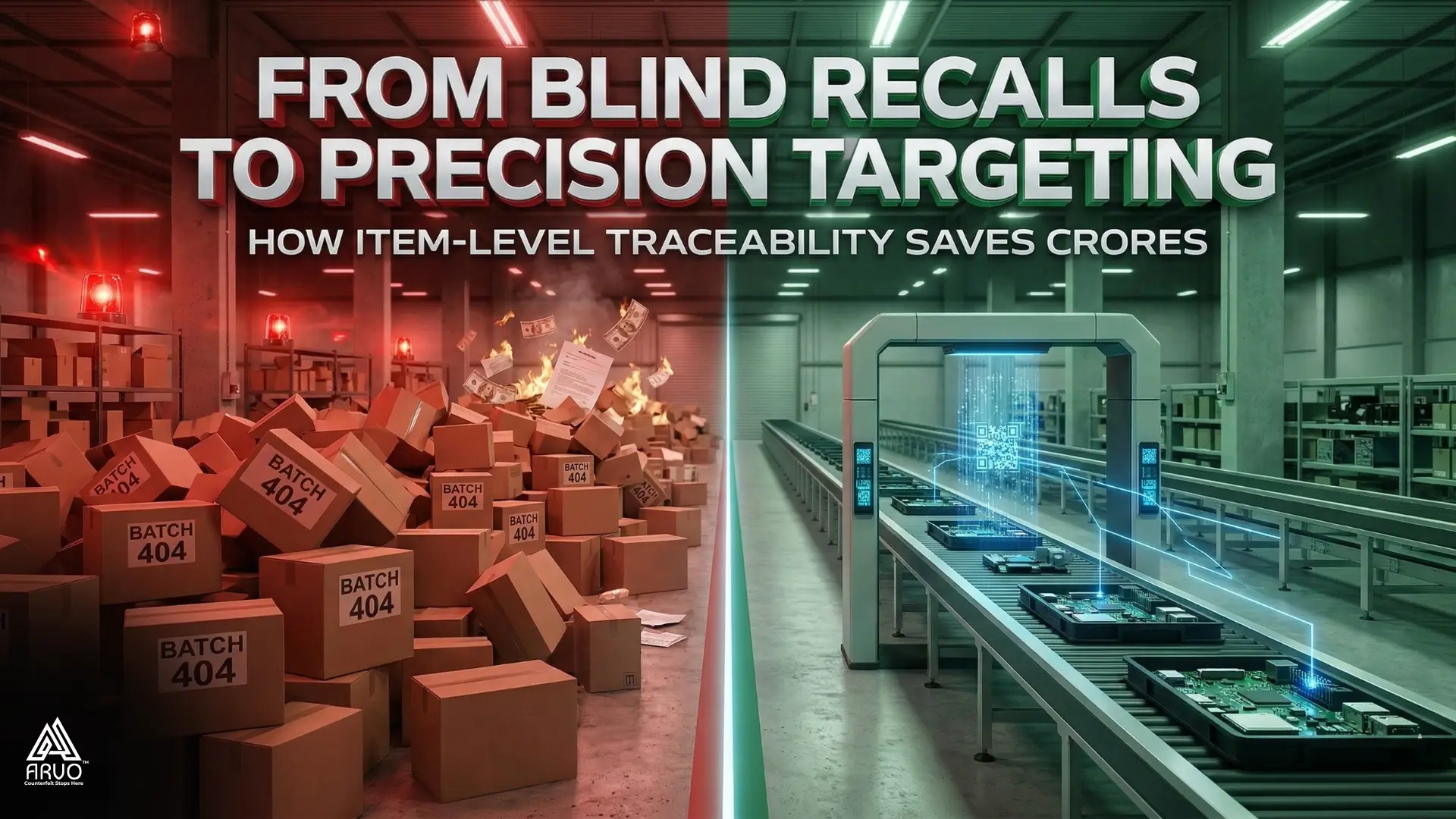
One of the most expensive operational crises companies face today is a product recall in manufacturing. In industries like automotive, electronics, and battery manufacturing, even a single defect can trigger large-scale recalls affecting thousands of products.
The problem?
Most companies still rely on batch-level tracking, which forces them to recall entire production batches even when only a small number of products are actually defective.
This outdated method leads to 10–20x higher recall costs.
Today, modern manufacturers are solving this challenge using item-level traceability, which allows them to identify and recall only the specific defective parts instead of entire batches.
The result: crores saved in logistics, reduced operational disruption, and stronger brand protection.
What Is a Product Recall in Manufacturing?
A product recall in manufacturing occurs when a company retrieves defective or unsafe products from the market to prevent safety risks or regulatory violations.
Product recalls typically happen due to:
- Component defects
- Supplier quality issues
- Manufacturing process errors
- Safety compliance failures
- Software or electronics malfunctions
Industries such as automotive, electronics, and battery manufacturing experience some of the most expensive recalls because of the complexity of their supply chains.
Without proper supply chain traceability, identifying the exact defective products becomes extremely difficult.
Why Traditional Batch Recalls Cost 10–20x More
Most manufacturers still track production using batch numbers or lot numbers.
While batch tracking helps identify production groups, it lacks the precision required during a recall event.
The Problem with Batch Recalls
When a defect is detected in a single component within a batch, companies often recall the entire batch because they cannot pinpoint the exact defective units.
This leads to several costly consequences.
Massive Operational Costs
- Recalling thousands of perfectly functional products
- Increased transportation and logistics expenses
- Disruption across warehouses and dealer networks
Revenue Losses
- Destroying products that are not actually defective
- Additional manufacturing costs for replacements
Brand Damage
- Loss of customer trust
- Negative media coverage
- Long-term reputation risks
In many cases, companies later discover that only 3–5% of the recalled products were actually defective.
Yet they were forced to recall 100% of the batch, dramatically increasing recall costs.
What Is Item-Level Traceability?
Item-level traceability refers to the ability to track every individual product or component across the entire supply chain using unique identifiers.
These identifiers may include:
- QR codes
- RFID tags
- Serial numbers
- Digital product IDs
Each product carries a digital record of its lifecycle, which can include:
- Manufacturing timestamp
- Production line information
- Supplier components used
- Quality inspection data
- Distribution and delivery path
This level of visibility allows manufacturers to trace any product from the factory floor to the end customer in real time.
How Item-Level Traceability Enables Precision Recalls
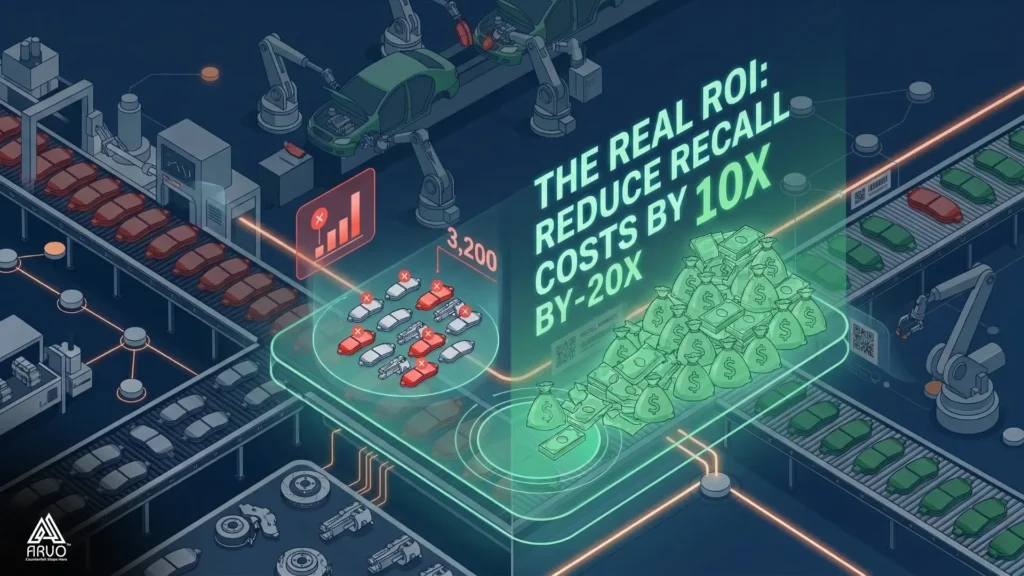
With item-level traceability, companies no longer need to recall entire production batches. Instead, they can isolate only the affected products.
Example Scenario
A defective brake pad component is discovered in one production run.
Without traceability:
- The manufacturer recalls 50,000 vehicles from the market.
With item-level traceability:
- Only 3,200 vehicles containing that specific defective component are recalled.
This level of precision significantly reduces recall costs.
Key Benefits of Precision Recalls
1. Targeted Product Isolation
Manufacturers can quickly identify the exact products affected by a defect within seconds.
2. Faster Recall Response
Companies can notify distributors, warehouses, and dealers immediately.
3. Lower Logistics Costs
Only the affected products are recalled instead of recalling an entire batch.
4. Improved Regulatory Compliance
Governments and regulatory bodies increasingly require traceability in safety-critical industries.
5. Stronger Consumer Trust
Customers value faster and more transparent recall communication.
How Automotive Leaders Are Reducing Recall Costs
Leading automotive manufacturers are investing heavily in digital traceability platforms to manage recall risks more effectively.
These platforms connect multiple points across the supply chain, including:
- Manufacturing plants
- Tier-1 and Tier-2 suppliers
- Warehouses
- Distribution partners
- Dealership networks
With real-time supply chain visibility, companies can identify the root cause of a defect within minutes.
Instead of issuing broad recalls, manufacturers can perform precision recalls, targeting only the vehicles or components affected.
This shift from blind recalls to precision targeting is becoming a key competitive advantage in modern manufacturing.
The Real ROI of Item-Level Traceability
Implementing item-level traceability systems delivers significant financial benefits.
Manufacturers adopting advanced traceability often see:
Up to 90% Reduction in Recall Scope
Only the affected products are recalled instead of the entire production batch.
10–20x Reduction in Recall Costs
Logistics, replacement manufacturing, and operational costs decrease dramatically.
Faster Root-Cause Analysis
Quality teams can quickly identify whether the issue originated from a supplier, production process, or component.
Stronger Compliance with Regulations
Governments worldwide are increasingly requiring traceability for safety-critical products.
For global manufacturers, these improvements can translate into saving crores in potential recall losses.
How Digital Traceability Is Transforming Supply Chains
Item-level traceability is part of a larger shift toward digital supply chain visibility.
Modern traceability systems integrate technologies such as:
- IoT sensors
- QR-based product identities
- Real-time tracking platforms
- Cloud-based traceability software
Together, these technologies create a transparent product lifecycle, allowing companies to track products from raw materials to the final customer.
Manufacturers adopting digital traceability today are setting the foundation for the next generation of resilient supply chains.
Why Traceability Is No Longer Optional
As regulatory pressure increases and recall costs continue to rise, traceability is becoming a business necessity rather than a competitive advantage.
Companies that fail to adopt traceability systems risk:
- Large-scale recalls
- Regulatory penalties
- Supply chain disruptions
- Loss of customer trust
On the other hand, organizations investing in item-level traceability gain stronger product visibility, faster issue resolution, and greater operational resilience.
How ARVO Helps Manufacturers Prevent Costly Recalls
At ARVO, we help manufacturers move from blind batch recalls to precision traceability.
Our traceability solutions enable companies to:
✔ Track every product at the item level
✔ Identify defective components instantly
✔ Perform precision recalls instead of blanket recalls
✔ Reduce recall costs by up to 90%
The result is a smarter, more resilient supply chain with complete visibility from factory to market.
Calculate Your Potential Recall Savings
Every manufacturer faces the risk of product recalls. The real difference lies in how precisely you can identify the affected products.
If your company still relies on batch-level tracking, recall events could cost 10–20 times more than necessary.
Discover how much your organization could save with item-level traceability and precision recalls.
👉 Try the Recall ROI Calculator
🔗 https://onearvoventures.com/contact-us/
Frequently Asked Questions
Q1. What is item-level traceability?
Item-level traceability is a system that tracks each individual product using a unique identifier such as a QR code, RFID tag, or serial number. This allows manufacturers to monitor products across the entire supply chain and quickly identify defective items during a recall.
Q2. Why are batch recalls expensive?
Batch recalls are expensive because manufacturers must recall entire production batches even if only a small percentage of products are defective. This results in unnecessary logistics costs, wasted products, and operational disruption.
Q3. How does item-level traceability reduce recall costs?
Item-level traceability allows companies to identify exactly which products contain a defective component. Instead of recalling thousands of products, companies can isolate and recall only the affected items, significantly reducing recall costs.
Q4. Which industries benefit the most from item-level traceability?
Industries with complex supply chains benefit the most, including:
- Automotive manufacturing
- Battery manufacturing
- Electronics production
- Aerospace
- Medical devices
These industries require high levels of traceability to ensure product safety, regulatory compliance, and efficient recall management.