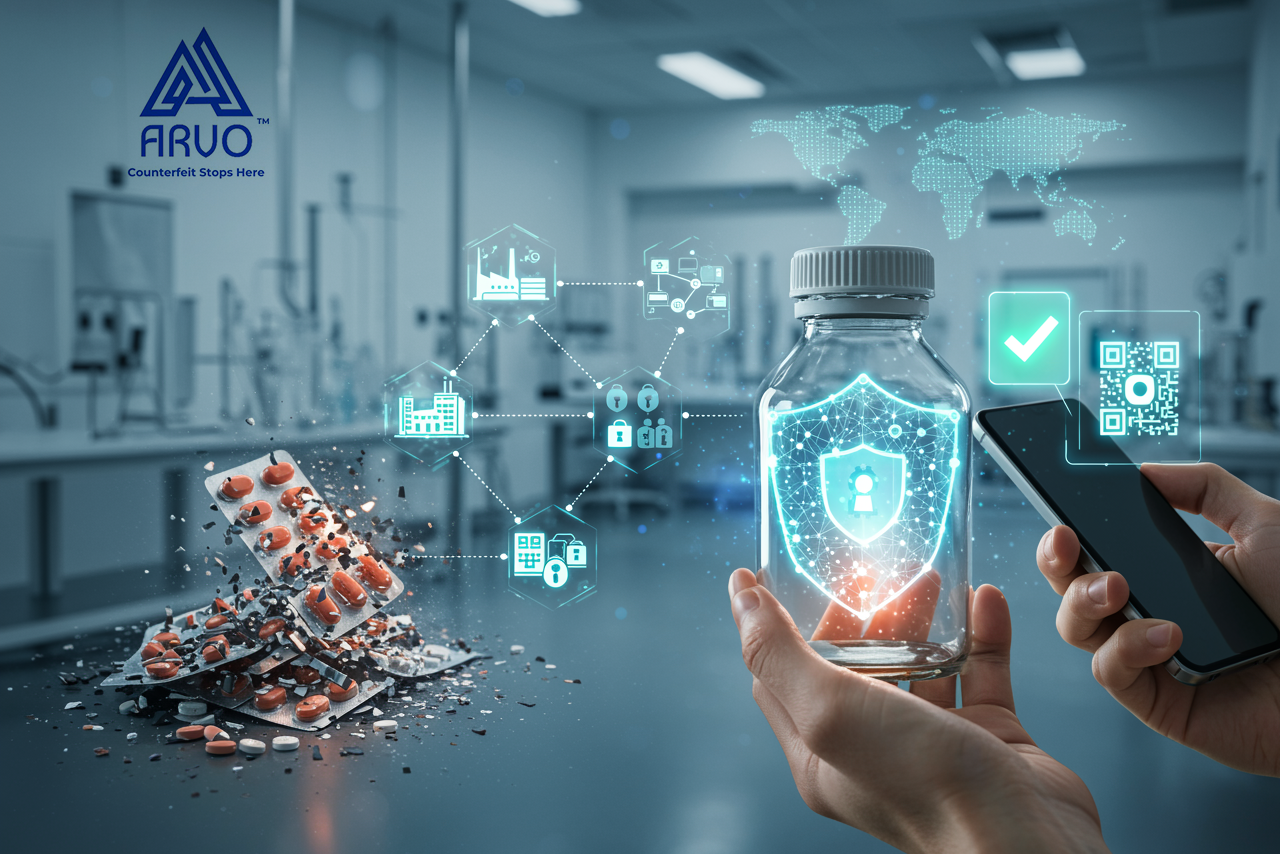
Reduce Pharma Counterfeits is no longer just an industry aspiration, it is a public health imperative. The pharmaceutical sector has long battled the menace of fake medicines. According to the World Health Organization, nearly 10% of medical products circulating in low- and middle-income countries are substandard or falsified. Beyond staggering revenue losses for manufacturers, counterfeit drugs cause patient harm, treatment failures, and, in the worst cases, death. The central question remains: how can the industry build a transparent, tamper-proof ecosystem that guarantees authenticity?
The answer lies in blockchain technology. A decentralized, immutable digital ledger, blockchain can fundamentally transform how medicines are manufactured, transported, verified, and consumed. While often associated with cryptocurrencies, its most powerful applications are emerging in real-world industries such as healthcare.
By enabling end-to-end traceability and accountability across every node of the supply chain, blockchain provides pharmaceutical companies with a practical path to authenticity at scale. Each product can be securely recorded, verified, and audited in real time, making diversion and substitution immediately detectable. Implemented correctly, this approach has the potential to reduce counterfeit drugs by as much as 90%, protecting patients while restoring trust in the global pharmaceutical supply chain.
Why Current Anti-Counterfeit Measures Fall Short

Pharma companies already use holograms, barcodes, RFID tags, and serialization to track medicines. While effective to some degree, these methods often fail due to:
- Data manipulation – centralized databases can be hacked or altered.
- Complex supply chains – medicines pass through multiple intermediaries, making oversight difficult.
- Limited consumer access – patients cannot always verify the authenticity of the drugs they purchase.
- Counterfeit adaptation – counterfeiters continuously evolve, finding new ways to mimic packaging or duplicate codes.
This is where blockchain stands apart: its decentralized, tamper-proof nature makes falsification nearly impossible.
How Blockchain Works in Pharma
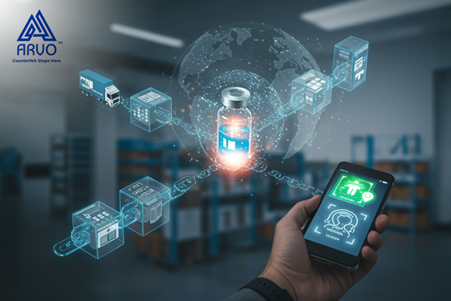
Blockchain is essentially a distributed ledger maintained across multiple computers (nodes). Every transaction whether it’s manufacturing, shipping, or retail is recorded as a “block.” Once verified, it’s added to the chain and cannot be altered without consensus across the network.
For pharma, this means:
- Each drug batch gets a unique digital identity.
- Every movement (from factory to distributor to pharmacy) is logged transparently.
- Patients can scan a QR code to verify authenticity in real-time.
Regulators can audit supply chains instantly without requiring physical inspections.
The 5 Ways Blockchain Can Reduce Pharma Counterfeits by 90%
1. Immutable Drug Serialization
While serialization exists today, the data is stored in centralized databases vulnerable to tampering. With blockchain, serialization becomes immutable and universally accessible. Each drug unit or batch has a digital record, making duplication nearly impossible.
Example: A batch of antibiotics manufactured in India is recorded on blockchain with timestamp, location, and plant details. If a counterfeit batch tries to enter the system later, it won’t match the blockchain record instantly raising a red flag.
2. End-to-End Supply Chain Transparency
Pharma supply chains often involve multiple intermediaries, distributors, wholesalers, pharmacies, hospitals. Blockchain creates a single source of truth accessible to all stakeholders.
- Manufacturers can monitor product movement.
- Distributors verify authenticity before acceptance.
- Pharmacies can confirm provenance before selling.
- Patients can authenticate drugs before consumption.
This multi-layer transparency makes it nearly impossible for counterfeit medicines to slip through undetected.
Smart Contracts for Compliance
Blockchain enables smart contracts, self-executing agreements coded into the ledger. Pharma companies can use them to enforce compliance automatically.
- Drugs not meeting quality checks cannot move to the next stage.
- Shipments outside temperature thresholds are flagged.
- Regulatory approvals are verified before distribution.
This proactive automation ensures that only compliant, genuine products move ahead, reducing counterfeit risks drastically.
Patient-Centric Authentication
A breakthrough advantage of blockchain is empowering patients to verify drugs themselves. With a simple smartphone scan of a blockchain-linked QR code, a patient can see the drug’s complete journey from manufacturing plant to pharmacy shelf.
This consumer-level empowerment creates massive deterrence for counterfeiters. A counterfeit pack, no matter how perfect its design, won’t match blockchain records.
Regulatory & Global Collaboration
Counterfeit drugs thrive due to fragmented regulation. Blockchain can act as a global compliance framework where regulators across countries share real-time access to pharma supply chains.
- Customs officers can instantly verify imported drugs.
- Regulators can track and recall defective products.
- Cross-border counterfeit rings can be detected faster.
Such collaboration can slash the global counterfeit market dramatically.
Benefits Beyond Counterfeit Reduction
While counterfeit reduction is the immediate win, blockchain unlocks broader advantages:
- Efficient recalls – defective drug batches can be located and recalled instantly.
- Operational savings – automation reduces paperwork, delays, and fraud investigations.
- Brand trust – consumers trust companies offering verifiable transparency.
- Global scalability – cross-border tracking supports international pharma trade.
Challenges to Overcome
Despite its promise, blockchain adoption in pharma isn’t plug-and-play. Challenges include:
- Integration costs – legacy systems must align with blockchain infrastructure.
- Stakeholder adoption – success requires collaboration across the supply chain.
- Data privacy – sensitive information must be shared without compromising confidentiality.
- Standardization – global pharma networks must agree on blockchain protocols.
Steps Pharma Companies Can Take Today
- Start with Pilot Projects – test blockchain in specific markets or product lines.
- Collaborate with Consortia – join industry-led initiatives like MediLedger.
- Invest in Patient Education – promote QR-based authentication apps.
- Integrate IoT & AI – use blockchain with IoT sensors for real-time tracking.
- Work with Regulators – align blockchain projects with evolving compliance laws.
The Future: A Counterfeit-Free Pharma World
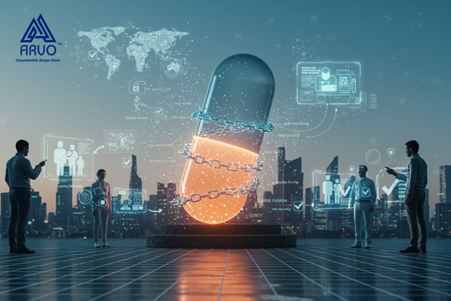
Blockchain has the power to reshape trust in medicines. By 2030, experts predict blockchain could become the global standard for pharma supply chain verification. If implemented at scale, counterfeit drugs could shrink by 90% saving billions in revenue and countless lives.
For pharma companies, this is not just about technology adoption. It’s about patient safety, brand integrity, and global health equity. By embracing blockchain now, the industry can take a decisive step toward a counterfeit-free future.
Blockchain is no longer just an idea, it’s the next layer of protection for the pharmaceutical industry. Don’t wait for regulations to force adoption. Be a first mover, protect your patients, and future-proof your supply chain.
FAQs
1. How exactly does blockchain stop counterfeit medicines?
Blockchain creates a tamper-proof digital record of every drug’s journey—from manufacturing to pharmacy. Each unit has a unique digital identity, so counterfeit products cannot match the blockchain record, making them instantly detectable.
2. Is blockchain expensive for pharma companies to adopt?
Initial implementation may require investment in infrastructure and integration with existing systems. However, the long-term savings from reduced counterfeits, fewer recalls, and streamlined compliance often outweigh the costs.
3. Can patients really use blockchain to verify their medicines?
Yes. By scanning a QR code or using a blockchain-enabled app, patients can instantly check if their medicine is genuine and trace its complete supply chain history.
4. What are some real-world examples of blockchain in pharma?
Projects like MediLedger in the U.S., Novartis’s vaccine shipment pilot, and blockchain platforms by Chronicles are already helping track and verify drugs across supply chains.
5. Will blockchain completely eliminate counterfeit drugs?
While no system can claim 100% elimination, blockchain can reduce counterfeits by up to 90% by making falsification extremely difficult and risky, while empowering all stakeholders manufacturers, distributors, regulators, and patients to verify authenticity in real-time.